UNC Charlotte Research Studies Spider Silk
UNC Charlotte spider silk research examines silk strength, genetics and potential uses in materials, medical bandages and pest control.
By Academic Writing Club Newsroom
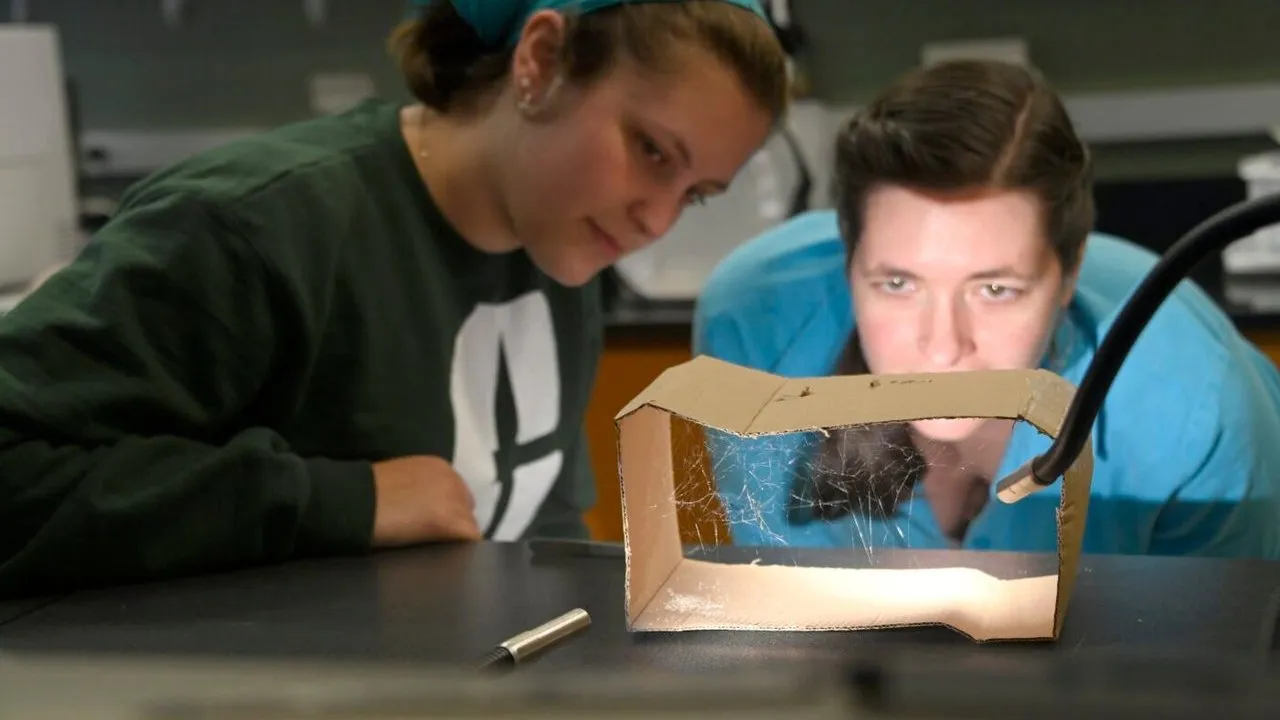
UNC Charlotte researcher Sarah Stellwagen is studying spider silk at the materials and genetics levels. The assistant professor in the Department of Biological Sciences examines silk through the Stellwagen Lab. Her work looks at how different silks function and how synthetic versions could be adapted for uses including fabrics, ropes, pest control and wet medical bandages.
Silk Properties Under Study
Spider dragline silk has tensile strength comparable to high-grade steel, while being stronger than steel for its weight. Other forms of silk can stretch substantially, work underwater or form liquid glue that captures prey.
Sarah Stellwagen, Assistant Professor in the Department of Biological Sciences at UNC Charlotte, said:
“I study silk from arthropods — things like insects and arachnids — at both the materials and genetics levels. We physically test silks by stretching them and measuring their material properties, and also try to understand the genes that encode for the silk proteins.”
Synthetic Silk Questions
A central challenge is converting liquid silk protein into a solid fiber at a scale relevant for public use. Researchers can produce the protein material, but have not yet replicated a spider’s ability to spin it into threads at that scale.
Understanding the distinct functions of natural silks could help researchers modify future synthetic materials for particular uses. Gluey silks may have medical applications as wet bandages or in humid environments because they are wet adhesives.
Sarah Stellwagen, Assistant Professor in the Department of Biological Sciences at UNC Charlotte, said:
“Once they do, the next question will be, ‘What kind of silk do you need?’ We are trying to understand what makes different types of silk function the way they do, so we can then modify future synthetics to match applications. Those can range from fabrics, ropes and pest control, depending on the silk type.”
Spiders Beyond Halloween
Stellwagen’s research also points to the role spiders play as insect predators. Public interest around Halloween offers an opportunity to appreciate spiders beyond the seasonal focus.
Sarah Stellwagen, Assistant Professor in the Department of Biological Sciences at UNC Charlotte, said:
“I want the public to know that they can love and appreciate spiders all year. They are incredibly important insect predators and they are far less dangerous than the media portrays them.”