Embry-Riddle Takes Top Three at Tracer FIRE
Embry-Riddle cybersecurity students took the top three places among 31 squads at the 14th annual Tracer FIRE competition.
By Academic Writing Club Newsroom
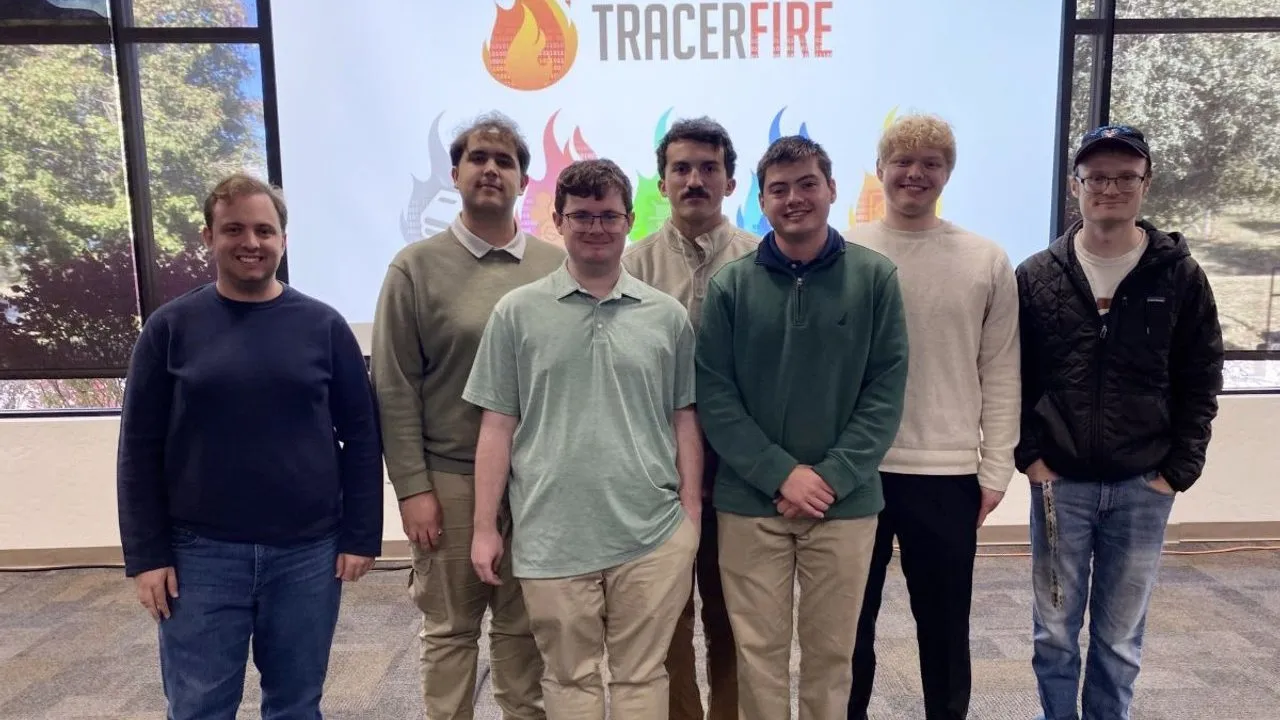
Embry-Riddle Aeronautical University students secured the top three places at the 14th annual Tracer FIRE cybersecurity competition, held Oct. 24-25 in Arizona. More than 100 participants on 31 squads competed in the forensic and incident-response exercise, sponsored by Sandia National Laboratories. Teams investigated a simulated cyberattack on a fictional water-treatment company from the Prescott Campus student union. The results gave students a test of technical analysis, evidence gathering and incident-response presentations.
First Place Team
Dark Pentad earned the highest score after examining computer systems and network records, analyzing malicious software and briefing judges on the attack, its perpetrators and possible security improvements. The team included seniors Joseph Rohani, Jacob Heusuk, Alexander Bieniek and Alec Parish, alongside sophomore Mark Higdon.
The group spent about an hour searching for a file using Velociraptor, one of the exercise’s forensic tools.
Alec Parish, senior at Embry-Riddle Aeronautical University, said:
“The malware analysis was tremendous. It was our biggest breakthrough, but it was also the place that we got stuck on the most and the thing we spent the most time on.”
Investigation And Communication
Second-place team Desert Eagle included juniors Ben Higgins, Aaron Tulino, Philipp Shchetinin and James Goyer. The team identified phishing emails used to access the fictional company’s systems and compared evidence with organizer-supplied descriptions of fictional threat groups.
Ben Higgins, junior at Embry-Riddle Aeronautical University, said:
“We’re essentially acting as forensics for hire. We needed to figure out what happened in the fake company’s systems and determine which threat actor was most likely responsible.”
The third-place team consisted of first-year students Hunter Varin, Jack Ruggeri, Sophia Penick, Diego Fitzpatrick and Alex Arroyo. The challenge ran overnight between Saturday’s technical sessions and Sunday’s final debriefs.
Complete Scenario Sets Teams Apart
Several Embry-Riddle students worked through the night. Multiple Embry-Riddle teams completed the full scenario, with final incident-response debrief presentations separating the leading teams.
Dr. Krishna Sampigethaya, chair and professor of the Department of Cyber Intelligence and Security at Embry-Riddle Aeronautical University, said:
“Cyber is not just about completing technical challenges. It relies on connecting the evidence, building a coherent incident narrative and communicating findings.”
The competition offered a practical setting for students to apply classroom skills to a structured cyberattack investigation.