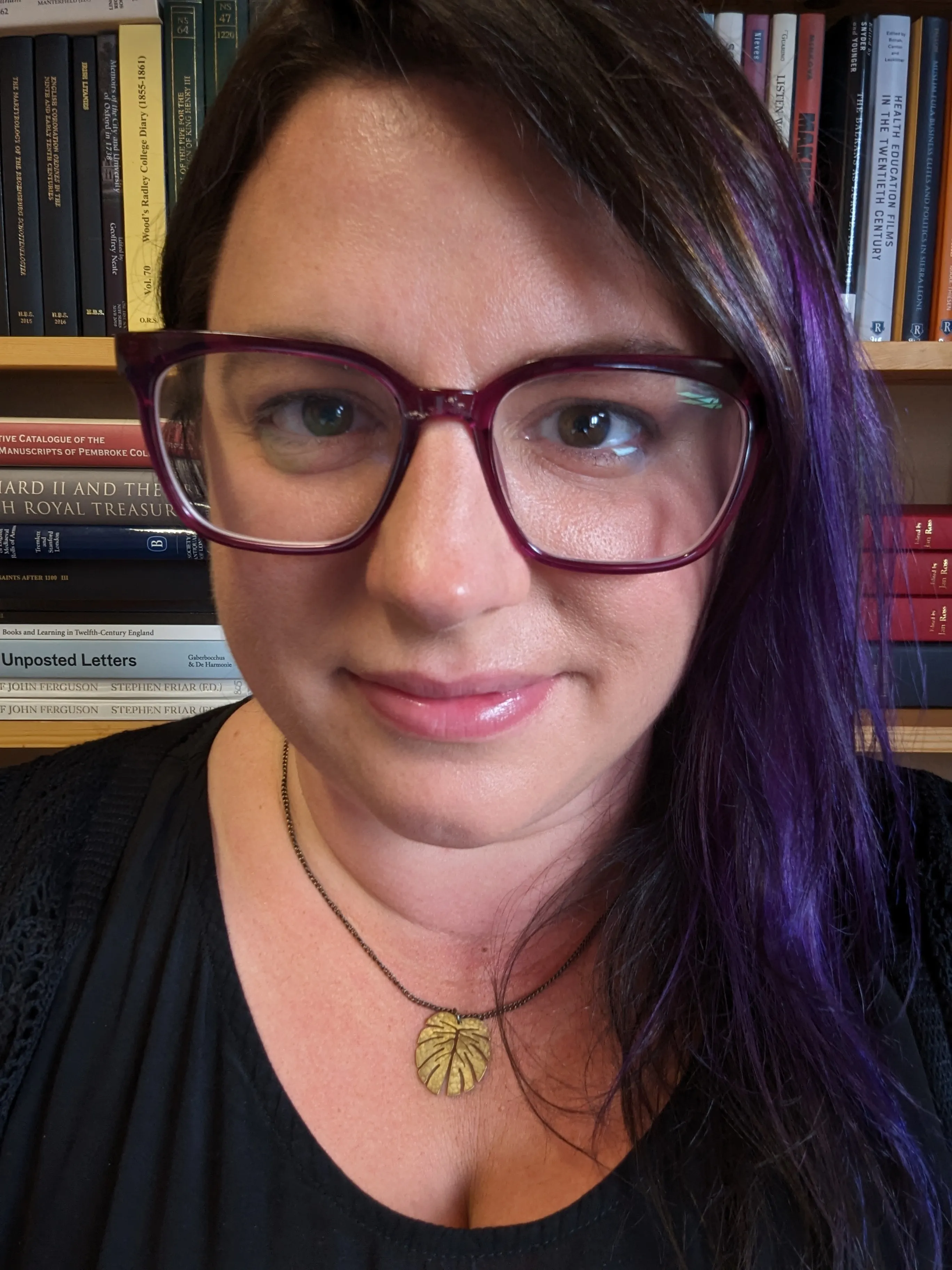
Megan Taylor, Partnerships Manager, Boydell & Brewer
I’m Megan Taylor, Partnerships Manager at Boydell & Brewer.
By Megan Taylor
From PhD to first book: what early career researchers need to know about academic publishing
Please introduce yourself to our readers and tell us a bit about your role and your work at Boydell & Brewer.
I’m Megan Taylor, Partnerships Manager at Boydell & Brewer. A big part of my role is looking at how we can build partnerships with universities and other organisations that support researchers and scholarly publishing.
One of the areas I lead is Boydell Horizons, our researcher development and open access publishing programme. Horizons grew out of conversations with researchers and university libraries about some of the challenges facing early career researchers, particularly in the humanities. We wanted to find a way of combining practical publishing education with a genuine pathway towards publication.
What I particularly enjoy about the programme is bringing together expertise from across publishing. Researchers hear directly from people working in editorial, production, marketing and open access, so they get a much clearer picture of what actually happens to a book from the initial idea onwards.
What is Boydell Horizons, and who is it for?
Boydell Horizons is a researcher development and open access publishing programme designed to support early career researchers as they navigate academic book publishing and develop potential monograph projects.
The full programme includes five expert-led workshops covering the publishing landscape and journey, open access, indexing and production, marketing and acquisitions, and the book proposal. Participants receive ongoing guidance and have an opportunity to develop and submit a monograph proposal. Publication is subject to the normal editorial and peer-review processes.
It is deliberately much more than simply teaching someone how to fill in a book proposal form. Academic publishing can feel quite opaque when you're approaching it for the first time. There is a whole vocabulary, a series of processes and quite a few people involved that researchers may never have encountered before.
That's why publishing literacy is such an important part of Horizons. We want researchers to understand not only what happens during publication but why it happens, so that approaching a publisher feels less like stepping into an unknown world. The programme's three main priorities are researcher development and publishing literacy, diversifying pathways to open access monograph publication, and finding more sustainable and equitable approaches to long-form open access.
We also now offer shorter versions of Horizons, including a one-hour Publishing 101 introduction and a condensed half-day workshop, because researchers need different things depending on where they are in their career and how developed their project is.
What do junior researchers most often misunderstand when they first approach an academic publisher?
One of the biggest things to understand is that having completed excellent research and having a publishable book are not quite the same thing.
When you're doing a PhD, understandably your immediate aim is producing a successful thesis. But when you start talking to a publisher, the conversation becomes much more explicitly about the book: who is going to read it, what is distinctive about it, why someone needs this book, where it sits amongst other scholarship in the field, and why now is the right moment to publish it.
It is also worth remembering that you're not expected to understand the entire publishing process before you approach a publisher. In fact, demystifying that process is one of the reasons we developed Horizons. Topics in our introductory Publishing 101 programme include proposals and peer review, open access for books, working with publishers and some of the common challenges faced by first-time authors.
Another really important point is to find the right publisher, not simply a publisher. Look at publishers' lists and recent books. Think about where books you admire in your own field are being published. Consider whether your project genuinely fits what that publisher does.

And then talk to people. Commissioning editors aren't mysterious gatekeepers behind an email address. Their job is to find books and authors and to build relationships with researchers. A conversation at the right stage can be extremely useful.
How does turning a PhD thesis into a monograph change the writing itself?
The key shift is to see the book as more than an edited thesis.
A thesis and a monograph have different purposes and audiences. Your thesis has been designed to demonstrate your research, methodology and contribution to a particular group of expert readers. A book needs to work as a book.
That means stepping back from the thesis and asking some fundamental questions. What is the central argument I want the reader to take away? Who am I writing for now? What does that reader need to know? What is genuinely necessary to make this argument?
You may find that something which was essential for demonstrating the rigour of your doctoral research doesn't need the same prominence in a book. Equally, something relatively small in the thesis might become much more important once you start thinking about the wider audience and argument.
The structure may need to change as a result. Chapters don't automatically need to mirror thesis chapters, and the book shouldn't feel as though the reader is being taken through the history of how the research was conducted.
This is part of the reason Horizons focuses on developing a first book-length project, rather than simply on getting a thesis published. The programme helps researchers develop stronger book proposals and understand the journey from a research project towards a published monograph.
That distinction can actually be quite liberating. You've done the enormous piece of work that is the PhD. Now you have an opportunity to ask: What book do I want to make from this research?
What should a doctoral student do now if they hope to publish their first book in a few years?
First, I wouldn't panic about feeling that you ought to have a book proposal ready immediately.
We've spoken to researchers at very different stages of this journey. Some are ready to start shaping a proposal; others simply want to understand how academic publishing works and what they should be thinking about for the future. Both are perfectly reasonable places to be. That's one of the reasons we've developed different levels of Horizons support.
There are, though, some very useful things you can start doing now.
Pay attention to the books you're reading. Who publishes the books that matter in your field? Which series do they appear in? Start building an understanding of the publishing landscape around your research.
Think about your reader. Try explaining your research without relying on the language of your thesis. Who should care about this research and why? Being able to articulate that is valuable long before you write a proposal.
Start thinking about the contribution of the eventual book. A proposal needs to communicate not simply what the book is about, but what it contributes.
Learn how publishing works. Understand what a proposal does, what peer review is for, what happens during production, how books are marketed and disseminated, and how open access might affect your options. These are exactly the sorts of areas we cover through Horizons.
And, most importantly, ask questions. Nobody starts their academic career knowing how commissioning, contracts, peer review, production, indexing, metadata, marketing and open access all fit together. You aren't supposed to.
Learning about those things earlier simply puts you in a much stronger position when the right project and the right publication opportunity come along.
What exciting plans and goals do you have for Boydell & Brewer over the next few years?
For me, one of the most exciting things is seeing Horizons move from an initial pilot into a growing researcher-development programme.
We began with our first cohort at the University of Southampton, and five workshops were delivered to that cohort, resulting in two book proposals being submitted.
We're now expanding the programme further. The next stage, starting in February 2027, includes 10 researchers supported through the University of Southampton, The British Academy and Midlands4Cities Doctoral Training Partnership.
But growth for us isn't simply about having more people on the programme. I'm particularly interested in how publishers can become involved earlier in researcher development and make the publishing process more transparent and accessible.
Traditionally, researchers might only have a substantial conversation with a publisher when they think they have something ready to propose. Horizons gives us the opportunity to build those relationships earlier, to share the knowledge that sits inside a publishing house, and to help researchers make more informed decisions about their work whether or not they're immediately ready to publish a book.
Ultimately, I'd like us to keep building that bridge between researcher development and scholarly publishing. If we can help researchers feel better equipped to navigate publishing, while at the same time creating more sustainable routes towards open access monographs, that's a very exciting direction for Horizons.
Author bio
Megan Taylor is Partnerships Manager at Boydell & Brewer and leads the development and delivery of Boydell Horizons, its researcher development and open access publishing programme. She works with universities, libraries and other partners to develop practical opportunities that support early career researchers and make the academic publishing process more accessible and transparent.