How to revise for exams: the study habits that actually stick
Rereading feels productive but does little. Here is how to plan exam revision around testing yourself, spacing your study and getting enough sleep.
By Academic Writing Club Newsroom · Updated
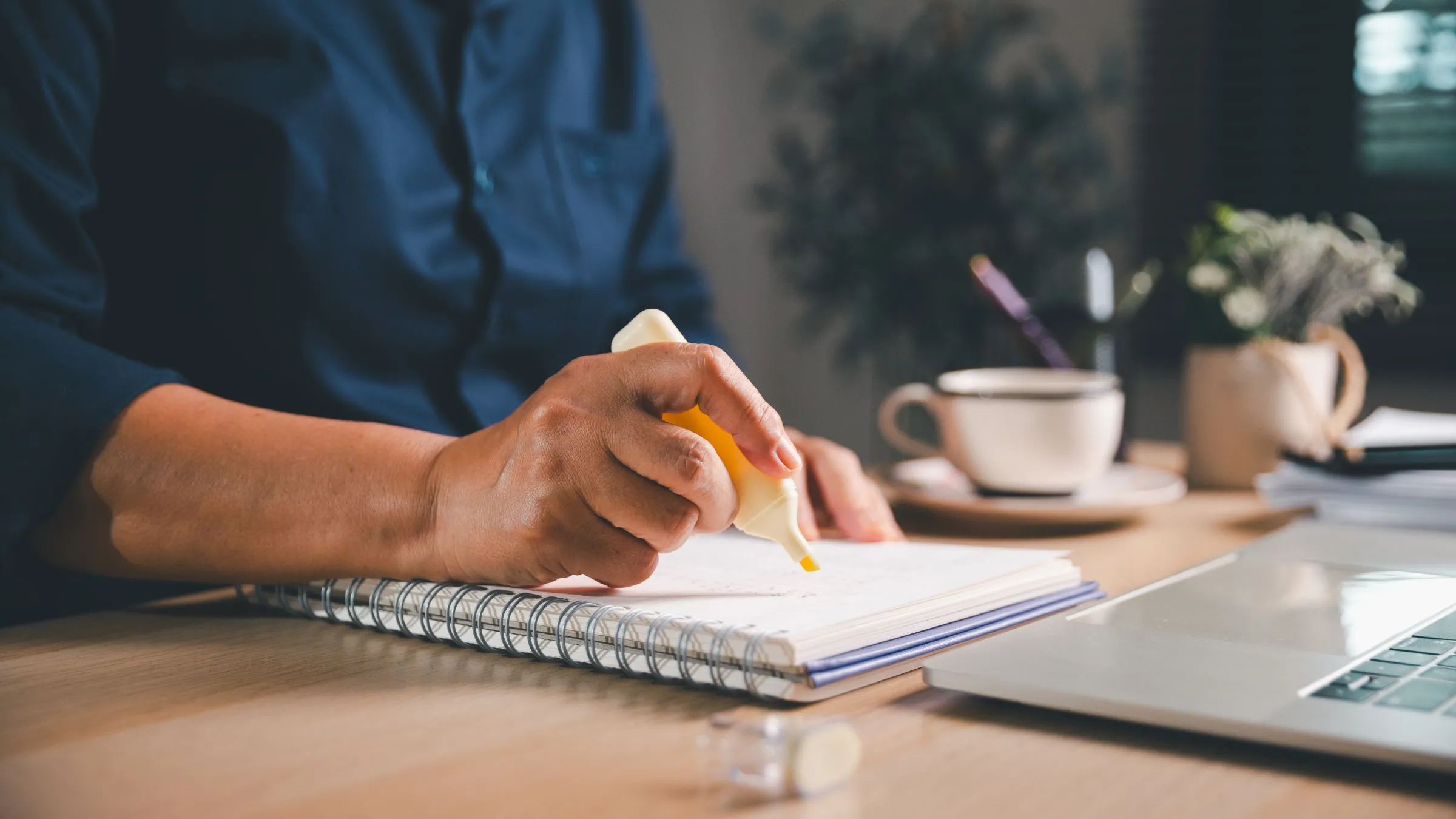
Reading your notes again and highlighting the important parts feels like revision. The research on learning says those habits do surprisingly little. Here is what works better, how to turn it into a plan for the week before an exam, and the everyday habits that make that week easier.
What the research says works
In 2013, five psychologists led by John Dunlosky reviewed ten common learning techniques and rated each one as high, medium or low utility. Some commonly used habits, including underlining, rereading and memory tricks such as mnemonics, came out as surprisingly low utility: they were hard to use well and gave uneven results. Two techniques were rated high utility because they helped students of many ages and ability levels across many subjects. The first is taking practice tests. The second is distributed practice, which means spreading your study sessions out over time instead of packing them into one long stretch.
Later reviews of the evidence point the same way. A 2017 meta-analysis led by Olusola Adesope found practice tests more beneficial for learning than restudying and every other comparison it examined. A 2014 meta-analysis by Christopher Rowland found that tests asking you to recall an answer gave larger benefits than tests asking you only to recognize it, so writing an answer out beats picking it from a list.
Test yourself before the exam does
Testing yourself is a form of retrieval practice: pulling information out of your memory rather than reading it again. Cornell University’s Learning Strategies Center calls its version “Blank Page Testing.” You start with a blank sheet and write down everything you can remember about a topic, as notes, a flow chart, a diagram or a graph. The gaps show you exactly what you need to go back to. It takes real effort, and the center’s point is that the struggle to remember is how the learning happens. Rereading can feel more reassuring: in a 2006 experiment by Henry Roediger and Jeffrey Karpicke, students who reread a passage felt more confident than students who tested themselves, but two days and a week later the students who had tested themselves remembered substantially more.
Practice exams work the same way. When you have past papers or practice tests, take them under conditions as close to the real thing as you can: the same time limit, ideally the same kind of room, and only the resources you will be allowed. For a closed-book exam, that means no notes and no answer key. If you have more than one practice test, take one at the start of your revision to see where you stand and how long it takes, and another once you have studied.
Spread it out instead of cramming
Spaced practice is the opposite of cramming. Cornell’s center puts it in numbers: you will do better on an exam if you study for one hour a day for 20 days than if you study for 10 hours a day for the two days before the test. How far apart to space your sessions depends on how long you need to remember the material: a 2006 review of 317 experiments by Cepeda and colleagues found that the best gap grows as the time until the test grows.
It also pays to mix subjects. Interleaving means working on several related topics or skills in one session, switching between them rather than finishing one before starting the next. It helps you learn each one, and it stops your other classes from falling behind while one exam takes over your week. The same center advises against working on one course for more than an hour or two at a time, because the ability to concentrate drops quickly after about 90 minutes.
A five-day plan
For a single exam, Cornell’s center suggests starting five days out and spending about two hours a day. Split the material into chunks, by chapter, topic or lecture. Each day has two kinds of work. Preparation means making something new from your notes: a study guide, flash cards, a concept map, a flow chart of a process, or practice questions you write yourself. It does not mean copying your notes out again or rereading a chapter. Review means checking what you actually know: blank page testing, quizzing yourself or a friend, working problems without looking at the answers, and taking practice exams.
On the first day you prepare the first chunk. From the second day on, you prepare a new chunk and review the ones before it, with review taking more of the time as the week goes on. The last day is review only, ending with an hour of testing yourself on everything. Two good review exercises: write a list of 20 topics that could come up and be ready to say why each might, and explain the hardest ideas out loud to someone else.
A concept map is worth making for topics full of connected ideas. Put the main ideas on a page and draw lines between them, and on each line write a few words saying how the two ideas are related. Those linking words are the hard part and the useful part, so do not skip them.
Habits that make exam week easier
Revision is easier when the work has been kept up through the term. Cornell’s center says an hour spent going over your notes soon after a class does as much as several hours a few days later, so at the least, summarize your notes right after each lecture. It also suggests a regular weekly review of each course.
When starting is the hard part, try the Pomodoro Technique: 25 minutes of focused work on one task, then a 5-minute break, then another 25 minutes. Turn off and remove distractions while you work; the center calls the idea that you can multitask a myth. When you plan, double your first estimate of how long something will take.
Finally, look after the basics. Staying up all night to study will not help you in the long run, and sleep improves long-term learning. Eat properly, drink water, and take real breaks. A rested brain remembers more than an exhausted one.
Sources
- Improving Students' Learning With Effective Learning Techniques (Dunlosky and others, Psychological Science in the Public Interest, 2013)
- Rethinking the Use of Tests: A Meta-Analysis of Practice Testing (Adesope, Trevisan and Sundararajan), Review of Educational Research, 2017
- The Effect of Testing Versus Restudy on Retention: A Meta-Analytic Review of the Testing Effect (Rowland), Psychological Bulletin, 2014
- Test-Enhanced Learning: Taking Memory Tests Improves Long-Term Retention (Roediger and Karpicke), Psychological Science, 2006
- Distributed Practice in Verbal Recall Tasks: A Review and Quantitative Synthesis (Cepeda and others), Psychological Bulletin, 2006
- Effective Study Strategies, Cornell University Learning Strategies Center
- The Five-Day Study Plan, Cornell University Learning Strategies Center
- Guidelines for Creating a Study Schedule, Cornell University Learning Strategies Center
- What To Do With Practice Exams, Cornell University Learning Strategies Center
- Concept Mapping, Cornell University Learning Strategies Center