How to read a research paper without getting lost in it
Research papers are not meant to be read from the first line to the last. Here is how to read one in passes and know what each section is for.
By Academic Writing Club Newsroom · Updated
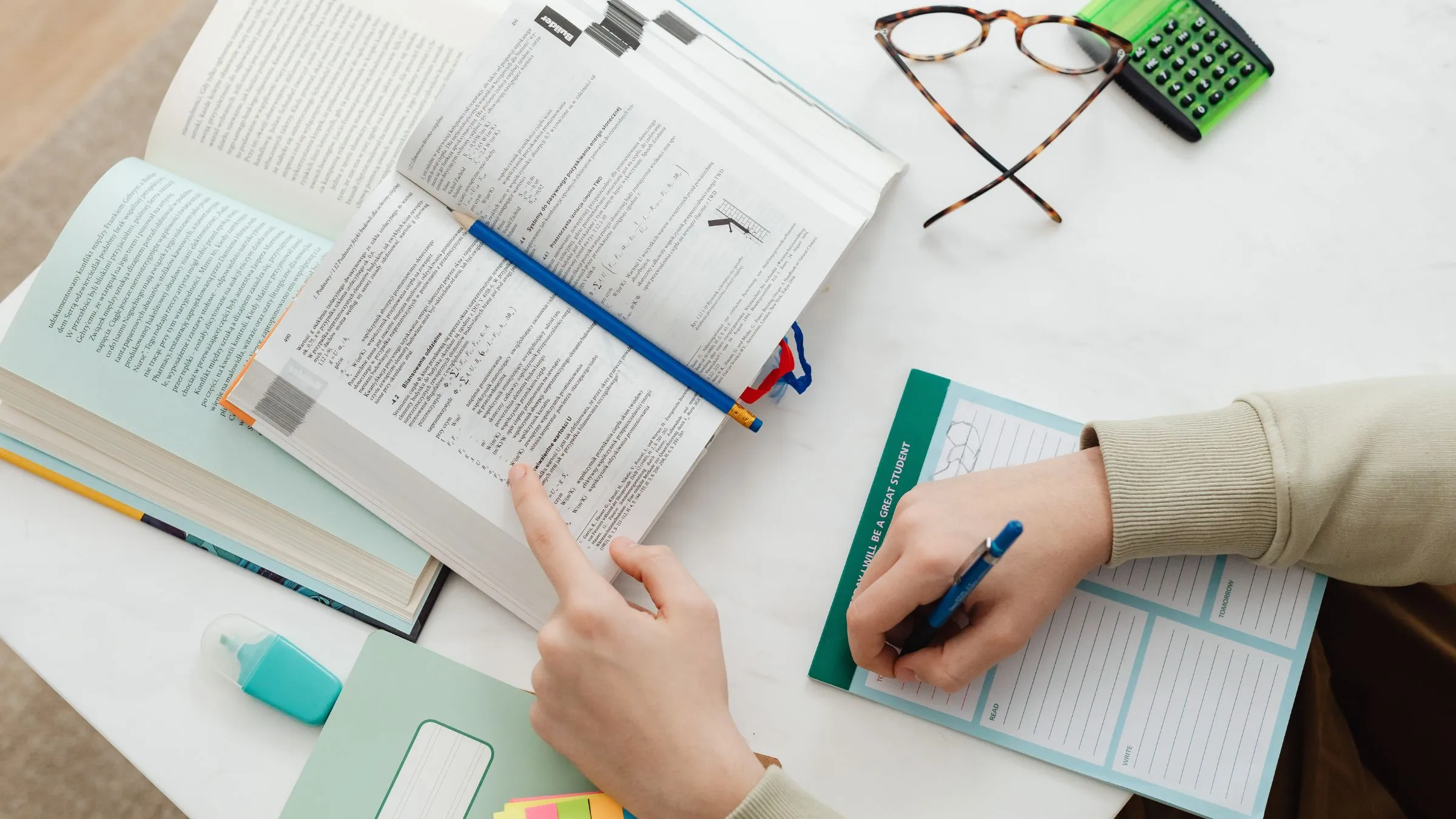
Faced with a first journal article, it is natural to start at the top and work down, and to be lost by the methods section. Reading research is a skill that takes time to build, and it is rarely taught. Here is what each part of a paper is for, a three-pass method for reading one, and how to use papers to find the other papers you need.
Know why you are reading
Before you open the paper, decide what you need from it. Cornell University’s Learning Strategies Center suggests asking why the reading was assigned and how you will use it: for an exam, a class discussion or a paper of your own. The answer tells you how closely to read and how to take notes. For exam study, set up an outline from the headings and fill it in. For a paper, highlight selectively and mark the passages you may quote. For discussion, write short comments in the margins.
What each section is for
Research articles often follow the same pattern, and NC State University Libraries’ guide to the parts of a scholarly article explains what each one gives you.
The abstract summarizes the main findings and helps you decide whether the paper is relevant. It is only a summary, so cite the paper itself, never the abstract. The introduction, sometimes called the background or literature review, explains why the research was needed and what earlier work found. When it mentions a study that is useful to you, go and read that study rather than citing it secondhand.
The methods section sets out exactly how the research was done, so that others could repeat it. It is the part to read closely when you want to judge whether the results hold up. Results report the data and outcomes, and the discussion is the authors’ interpretation of them. For many readers, the discussion is the most useful section. The conclusion usually sums up the study and often states its limitations and what it could not show, which is why NC State’s librarians suggest you might read it first. The references list every source the paper cites, often 20 to 50 or more, and they are a ready-made reading list.
The University of Illinois Library’s guide to the structure of an article adds a question to carry into each part. For the introduction: what is the authors’ goal, and what does this work add? For the methods: is everything there that you would need to repeat the study? For the results: are the results presented in a factual, unbiased way, and are the data clear? For the discussion: does the data in the results support the authors’ argument, and where is that argument weak?
Skim first, then read
Illinois’s librarians say reading a scientific article is not like reading a book, and that trying to plow straight through is often overwhelming. They suggest skimming first: read the abstract to see whether the paper interests you, jump to the discussion and conclusions to see what the authors learned, and only then go back to the methods to see how they did it, or to the results to check that the discussion matches the findings. People who read papers for a living differ in how they do it, too. George Mason University’s writing program points to a 2016 piece in Science by Elisabeth Pain, which gathers many scholars’ approaches, as showing how reading varies from person to person and from discipline to discipline. Treat any method, including the one below, as a starting point.
The three-pass method
In a short paper called “How to Read a Paper,” the computer scientist S. Keshav of the University of Waterloo sets out a simple approach: read a paper in up to three passes instead of plowing from beginning to end.
The first pass takes five to ten minutes. Read the title, abstract and introduction carefully, then only the section headings, then the conclusions, and glance through the references. By the end you should be able to say what kind of paper it is, what other work it builds on, whether its assumptions look sound, what it claims to contribute and whether it is clearly written. That may be enough. Many papers you look at only need one pass.
The second pass takes up to an hour. Read with more care but skip the fine detail, such as proofs. Jot down the key points or make notes in the margins. Look closely at the figures and graphs: are the axes labeled, and are results shown with error bars? Mark references you have not read that look important. After this pass you should be able to explain the main argument of the paper, with its evidence, to someone else. If you still cannot follow it, you can set it aside, read some background material and come back, or push on.
The third pass is for papers you need to understand in depth. The idea is to rebuild the work in your head, making the same assumptions as the authors, and to question each assumption as you go. It is slow: Keshav estimates four or five hours for a beginner and about an hour for an experienced reader. At the end you should be able to reconstruct the structure of the paper from memory and say where it is strong and where it is weak.
Using papers to find more papers
The same method helps when you need to survey a whole topic, for a literature review or a dissertation. Keshav suggests starting with an academic search engine such as Google Scholar and a few well-chosen keywords to find three to five recent papers. Give each one a first pass and read their related-work sections. With luck, they point you to a recent survey paper that maps the field for you.
If not, look at the reference lists for papers that several of them cite and authors whose names keep appearing. Those are the key papers and researchers in the area. Read those, follow their recent work, and repeat until new papers stop turning up sources you have not seen.
Keep at it
The first few papers will be slow. Use the headings to decide where to spend your time, read the conclusion early, and give yourself permission not to understand every line on the first pass. The skill builds with practice: Keshav’s own estimate for the deepest reading falls from four or five hours for a beginner to about an hour for someone experienced.
Sources
- How to Read a Paper, S. Keshav, ACM SIGCOMM Computer Communication Review, July 2007
- Anatomy of a Scholarly Article, NC State University Libraries
- How to Read a Scientific Paper: Structure of an Article, University of Illinois Library
- Elisabeth Pain, How to (Seriously) Read a Scientific Paper, Writing Across the Curriculum, George Mason University
- 3 P's for Effective Reading, Cornell University Learning Strategies Center